
DOORS OPEN SEPTEMBER 16 · JOIN THE PRIORITY LIST
Teach Real Chemistry with Plants, Fiber and Color —
One Ready-to-Teach Lesson a Month
A 12-month natural dyeing curriculum for ages 8–15. No dyeing experience needed.
The founding round sold out. We are opening our doors again soon!
Every lesson pack includes:
Teacher Notes — teach straight from them, no dyeing experience needed
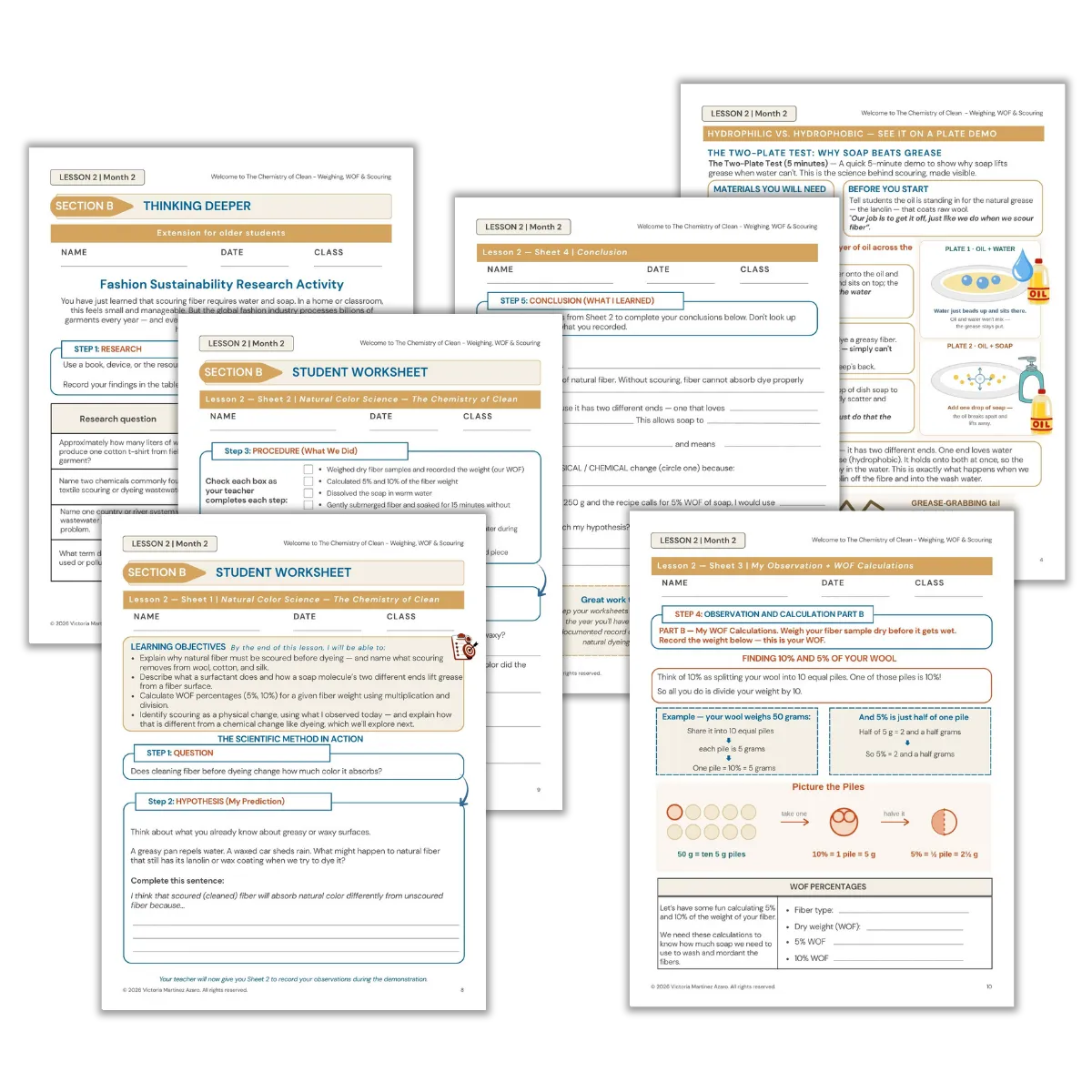
Student Worksheets (4 sheets) — question, hypothesis, observation, conclusion
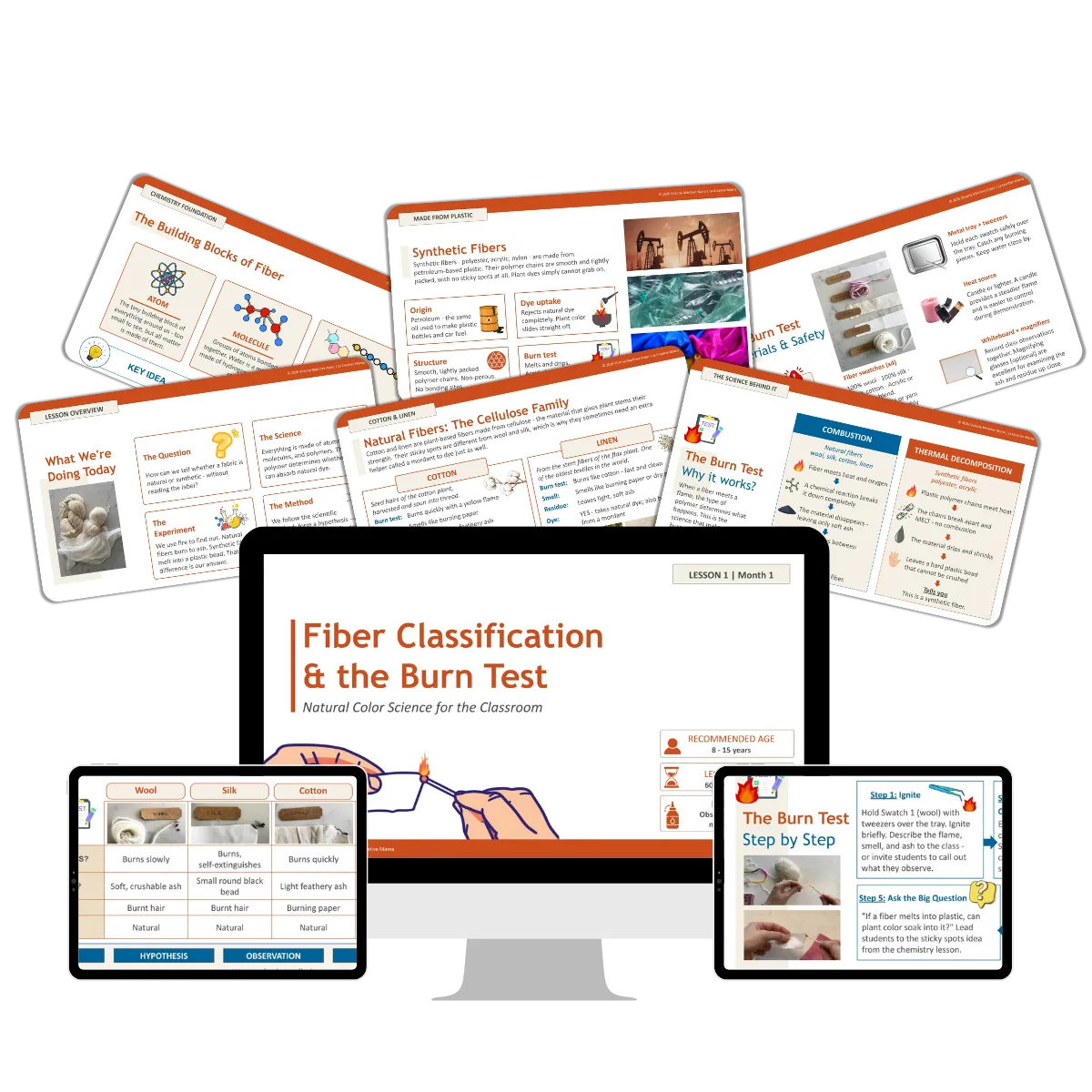
Classroom slide deck —matched to the lesson
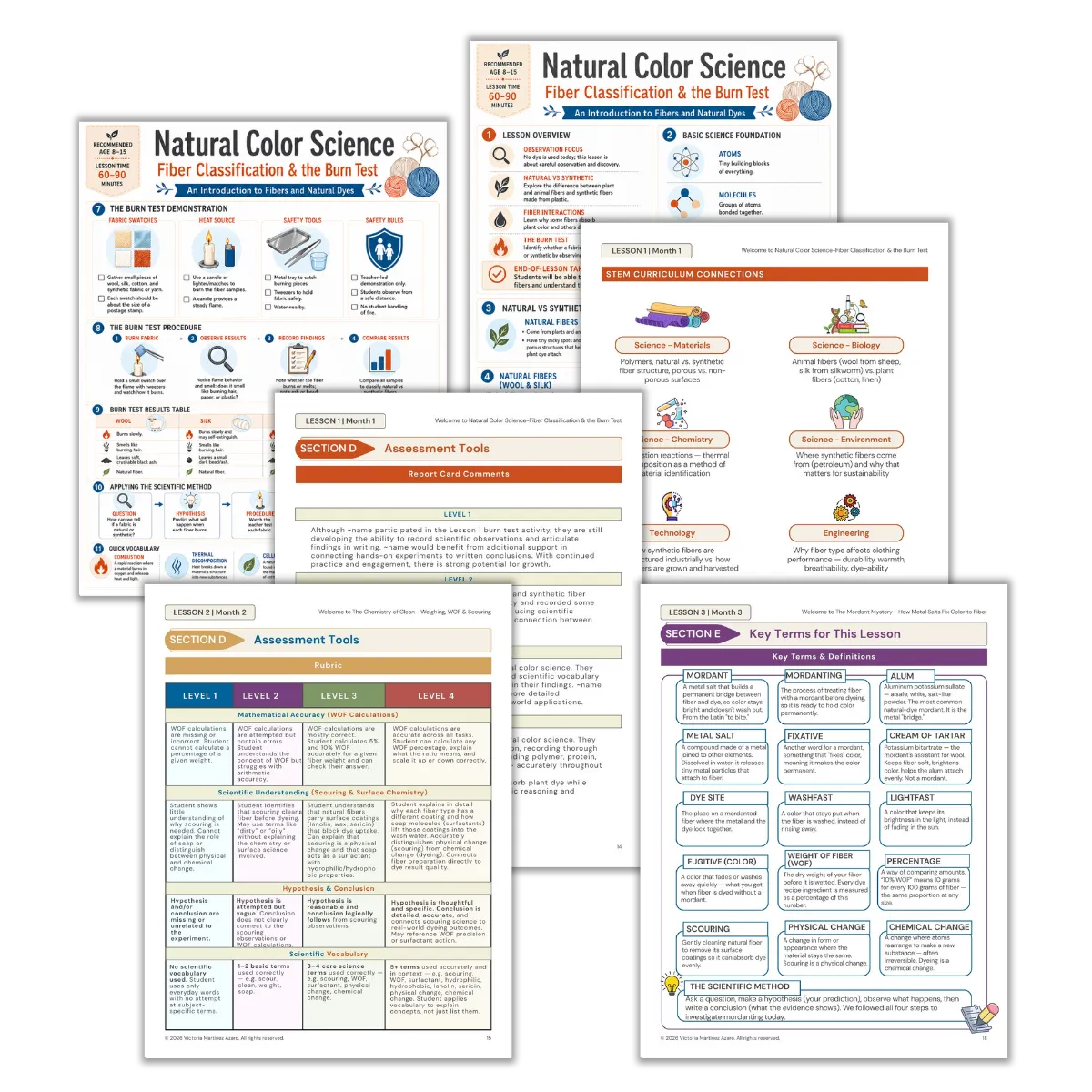
4-level rubric + copy-paste report card comments
Students build a Natural Dye Swatch Book
Teacher's Cheat Sheet — the whole lesson at a glance
STEM curriculum connections + three lines of inquiry
Extension for older students: fashion sustainability research & lesson glossary
You didn't become a teacher to spend Sunday nights building units from scratch.
There's never time.
Cross-curricular, hands-on units take hours you don't have — so the good ideas stay on the someday list.
"Hands-on" usually means "high-stress.
Practical science that's genuinely safe, structured and classroom-tested is surprisingly hard to find.
The paperwork eats your evenings.
Even when the lesson goes beautifully, the rubric, the assessment, the report card comments — that's still all on you.
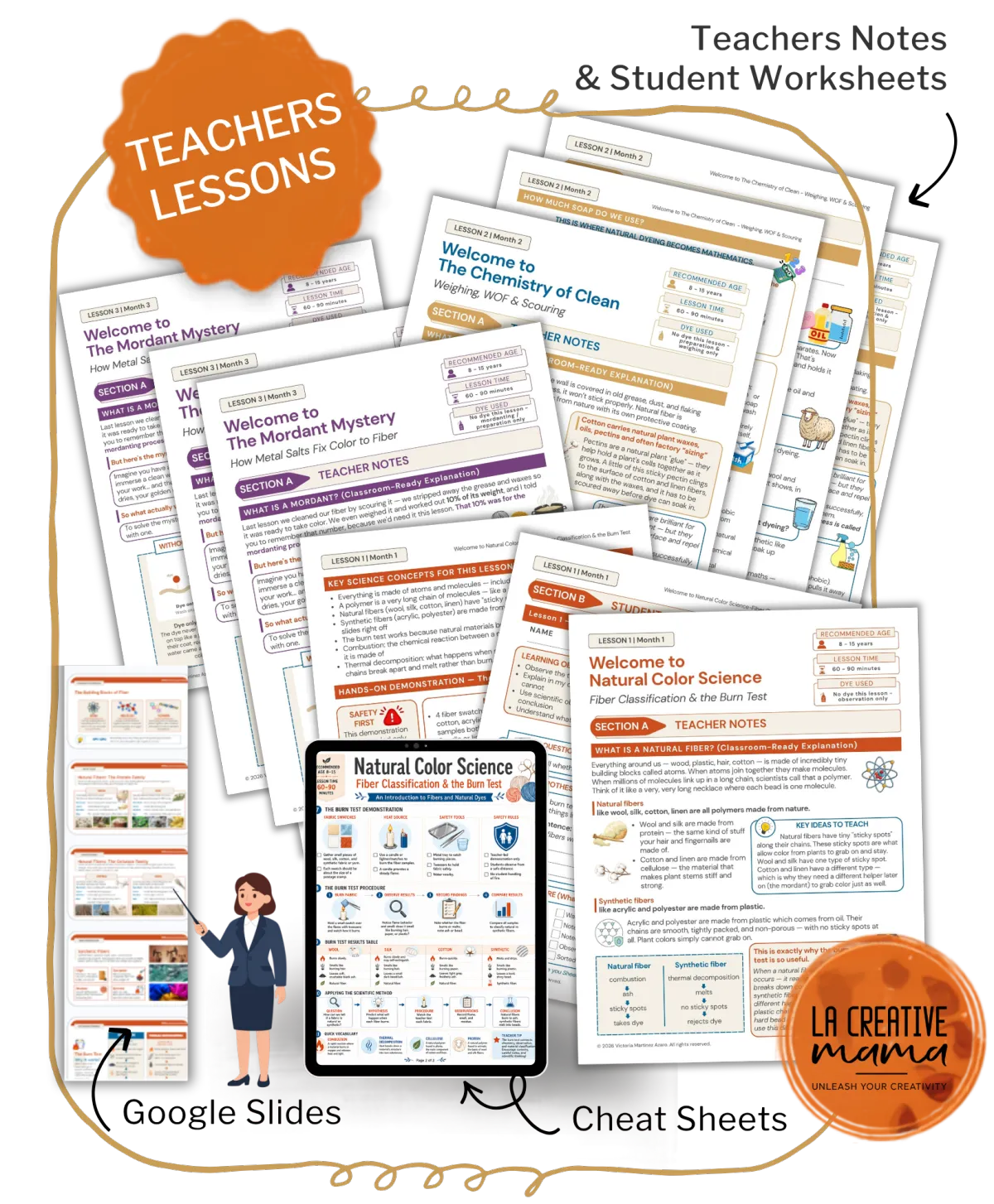
Natural Color Science hands you the whole thing, done.
Every lesson arrives complete: the science explained in classroom-ready language, the demo steps, the worksheets, the slides, the rubric, the report comments.
You open the pack, gather kitchen-level materials, and teach.
Inside every monthly lesson pack
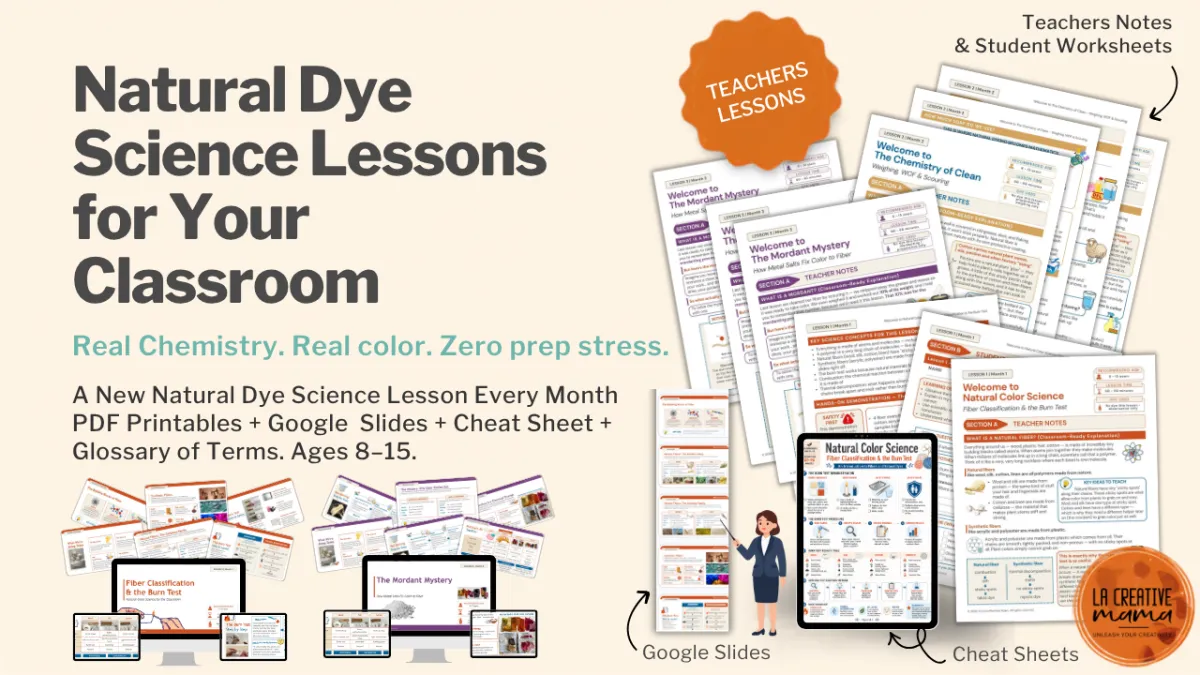
Teacher's Notes — the chemistry explained in warm, classroom-ready language. Analogies instead of molecular notation, plus a step-by-step teacher-led demonstration, materials list, safety guidance and pro tips.
Student Worksheets (Sheets 1–4) — built on the scientific method: Question → Hypothesis → Procedure → Observation → Conclusion.
Swatch Record pages — students build their own Natural Dye Swatch Book across the year. Real evidence of real chemistry.
Three extension lines of enquiry
Fashion sustainability research activity for older students
Presentation slide deck — classroom-ready and matched to the lesson, so you're never narrating from memory. Editable Google slides & PDF.
Teacher's Cheat Sheet — the whole lesson at one glance, printable.
4-level assessment rubric + copy-paste report card comments — assessment done before you've even taught the lesson.
STEM curriculum connections — science, math, technology, engineering and literacy links, extension activities for older students, and three lines of enquiry.
Lesson glossary — every key science term, defined for ages 8–15.
The chemistry inside the first three lessons
Lesson 1: Fiber Classification & the Burn Test
Can you tell what a fabric is made of without reading the label?
Students test small samples and read the evidence: natural fibers burn to soft ash, synthetics melt into a hard plastic bead.
Combustion vs. thermal decomposition — two reactions, two pieces of evidence
Protein, cellulose and plastic-based fibers, and how to tell which is which
Why natural fiber has "sticky spots" that hold color, and synthetic chains don't
Classifying by evidence, not by appearance
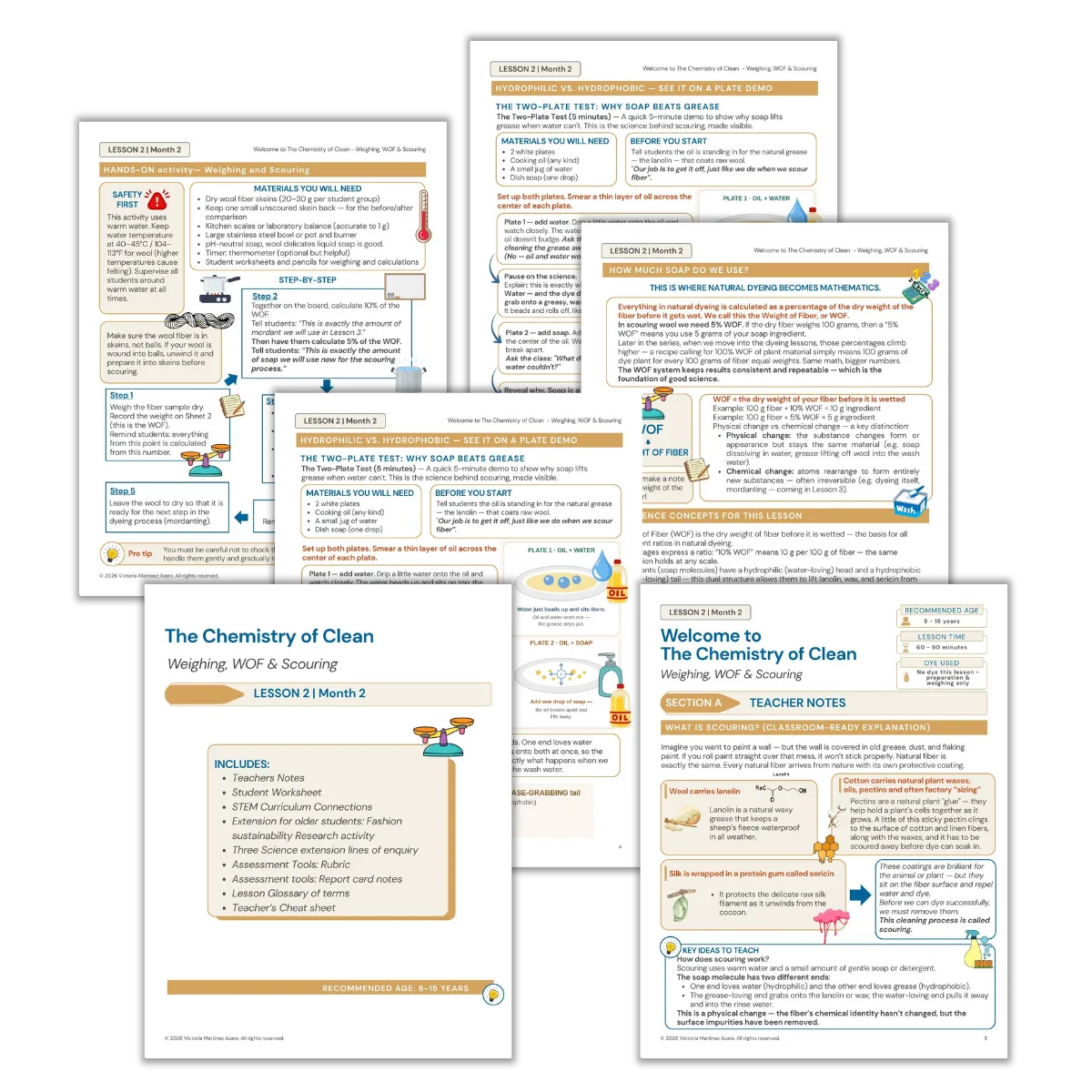
Lesson 2: The Chemistry of Clean
Why won't dye stick to a greasy fiber?
Students weigh fiber, calculate Weight of Fiber percentages (real classroom math), and scour wool. The 5-minute Two-Plate Test shows exactly why soap beats grease.
Surfactants: one end grips water, the other grips oil
Physical vs. chemical change — what scouring actually does to fiber
Weight of Fiber percentages: real math, real result
Waxes and pectins — the coatings that block color before you start
Lesson 3: The Mordant Mystery
Why does some dyed fiber fade in a week while some stays bright for years?
Students solve the mystery of the invisible step that makes natural color last: the metal "bridge" between fiber and dye.
Metal salts as a bridge — how alum bonds color to fiber
Chemical change: the fiber is permanently altered, not just coated
Washfast vs. fugitive color, and how to test the difference
Controls and fair testing — mordanted and unmordanted, side by side
One story, told over 12 lessons
The lessons build on each other, following the La Creative Mama Natural Dyeing Method:
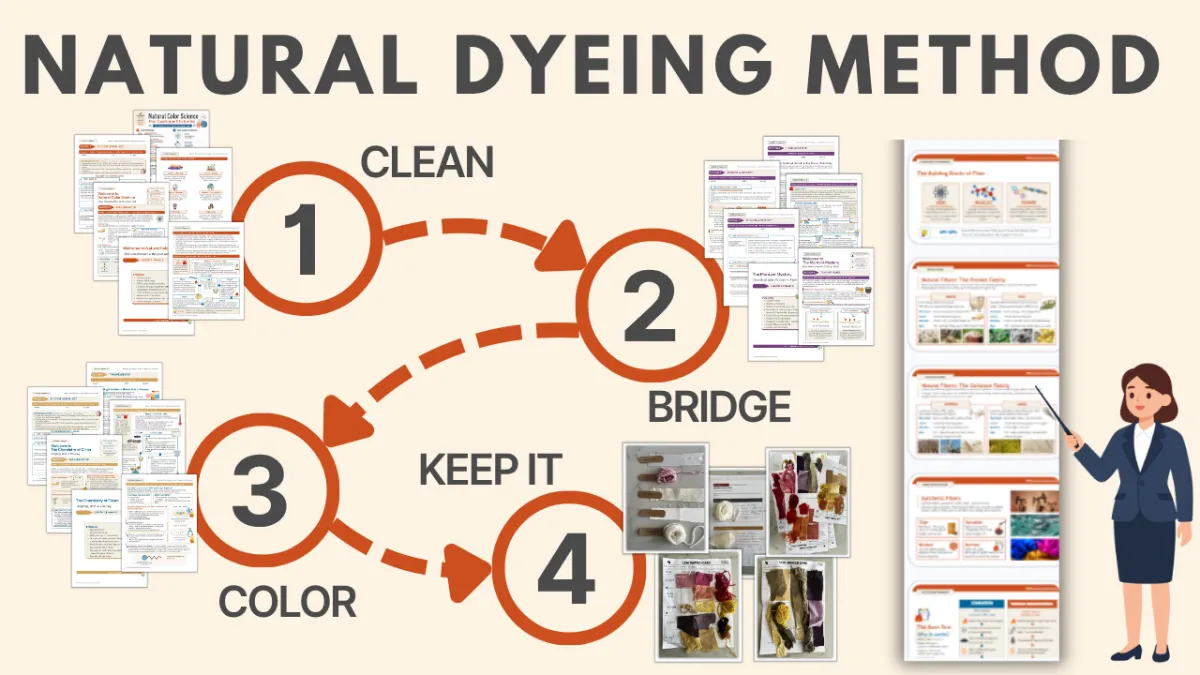
🌺First your students learn what fiber is and how to prepare it.
🌺Then the invisible chemistry that makes color permanent.
🌺Then — the moment they've been waiting for — the first real dye bath: onion-skin gold.
🌻From there the year opens up: dyeing with avocados, slow solar dyeing, the bug that changed history (cochineal), forest purples from logwood, pH color-changing chemistry, the science of dye exhaustion — until every student closes the year with a complete Natural Dye Swatch Book of their own.
Built for real classrooms, not perfect ones
The scientific method, every time.
Every lesson runs Question → Hypothesis → Observation → Conclusion, so the structure does the classroom management for you.
Assessment included.
A 4-level rubric and ready-to-personalise report card comments come with every lesson. Copy, paste, done.
Curriculum connections mapped.
STEM links across science, math, technology, engineering and literacy — so justifying the unit to a department head takes one page, not one weekend.
Safety by design.
Every flame and mordant step is teacher-led, with full safety guidance written into the lesson. Students hypothesise, observe and record; you handle the demonstration.
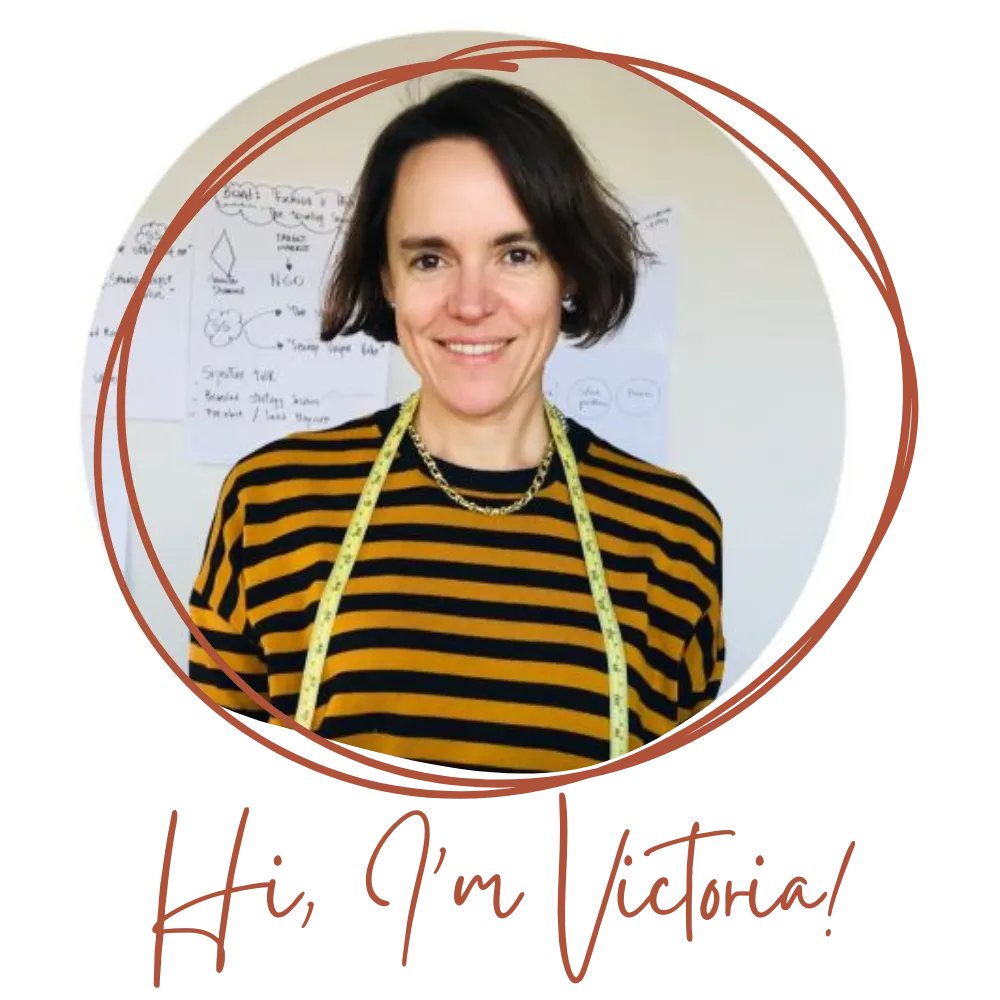
Hello, I'm Victoria
I'm the founder of La Creative Mama, and I've spent more than 20 years working with natural color — as a dyer, a fashion sustainability lecturer, and an educator who has taught thousands of makers online from my home in New Zealand.
Natural Color Science is my first curriculum built specifically for classrooms. I wrote it because natural dyeing is the best hands-on chemistry lesson I know: it's safe, it's beautiful, and students never forget the day they see color emerging from a leaf, a food, a flower...
Every lesson in this curriculum is one I'd be proud to hand to the teacher next door.
Priority list members get this amazing BONUS!
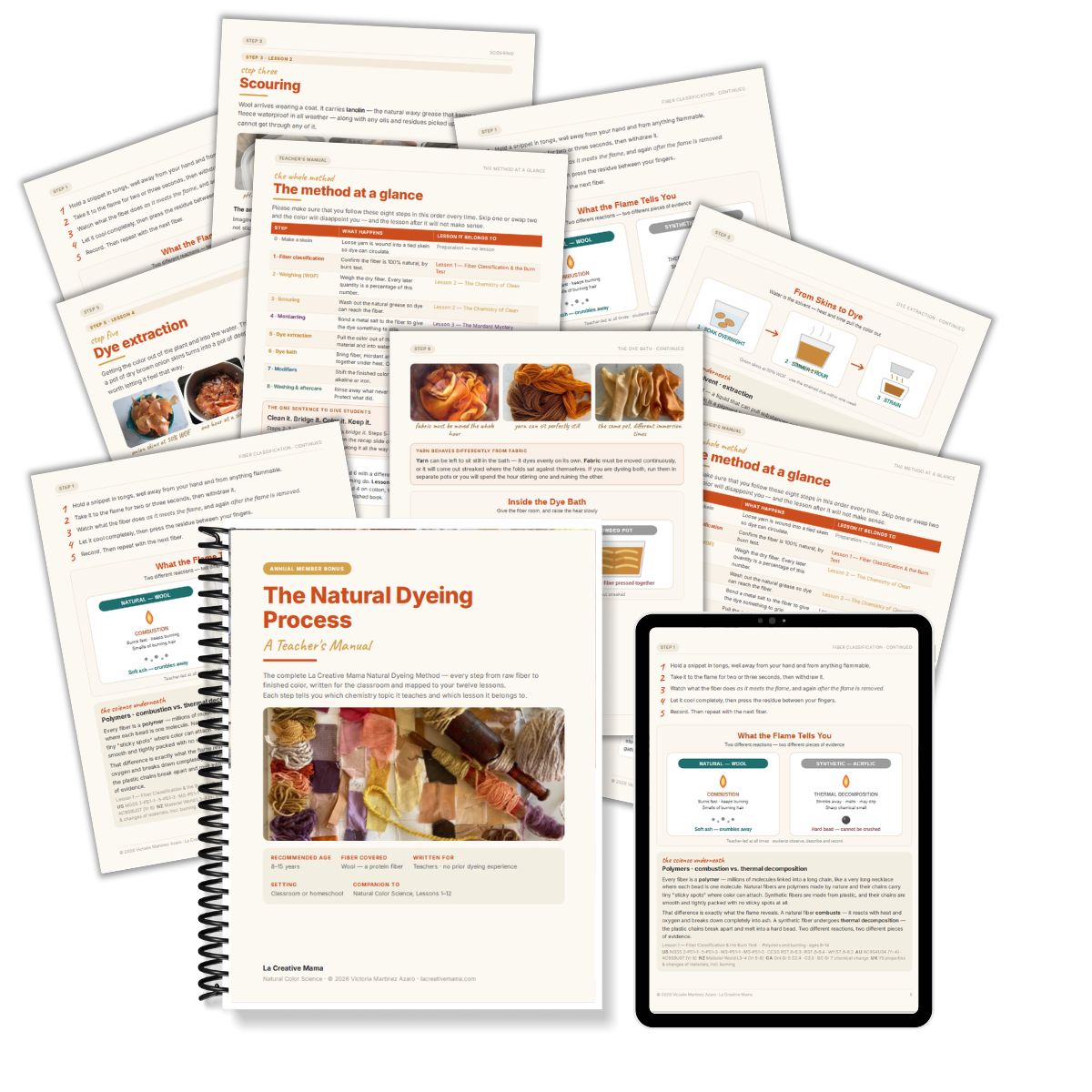
Your bonus: The Natural Color Science Teacher's Manual
Each lesson teaches one slice of the process. The manual is the whole picture in one place — the eight steps of natural dyeing, end to end, written for a teacher who has never dyed anything
The complete method — making a skein, fiber classification, weighing, scouring, mordanting, extraction, the dye bath, modifiers, aftercare
The science underneath every step — what's happening chemically, and which lesson it belongs to
A standards index for five countries — one page to put in front of a department head
Photographed throughout, from my own dye kitchen
Thirty-two pages, yours to keep whether you stay a month or the whole year.
Join the Priority List
One complete, ready-to-teach natural dyeing lesson a month. The chemistry, the worksheets, the slides, the rubrics — done.
FAQ
What ages is this for?
Ages 8–15, with extension activities for older students. Every lesson is written to adapt up or down.
Do I need any dyeing experience?
None at all. Every lesson assumes you've never dyed anything — the teacher notes walk you through each step, with pro tips where it matters.
What materials do I need?
Kitchen-level equipment: a digital scale, a dedicated pot, alum, and fiber. Each lesson pack includes the full materials list well before you need it.
Is it safe for a classroom?
Yes — every flame and mordant step is teacher-led, with complete safety guidance built into every lesson.